To follow up on my previous Mash and Boil post, I’m gonna post up some of my notes, fixes, changes and thoughts after using this thing for 5 months.

In the next few weeks I am gonna address the concerns I and other have had or have heard about, and what I did to help get my Mash and Boil dialed in.
Some of the points are going to be..
- Heat Loss
- Temp Fluctuation
- Lack of pump
- Stuck Mash
- General design
Today its going to be the biggest concern I and other have or had when looking at the Brewers Edge Mash and Boil…
Temp Fluctuation
When I was looking at the MB and deciding if I should get it, the big concern on almost every forum temp control.
- huge temperature fluctuation
- Losing heat very quickly.
- The controller overshooting set temps, and dipping too low before turning on the heat.
But because I mostly planned on mashing in my regular mash tun, this did not concern me…much.
But when I did start to use the MB to mash as per the instructions, oh yea, there was a bit of concern.
There are a few issues working against the MB here. The metal design, false readings, mechanically poor mash instructions for this system.
But the big temp swings, the heat loss and the controller issue are all related and easily fixed or adjusted out.
Heat Loss
While the MB is described as being double walled, the two thin sheets of metal have little effect on heat loss or heat retention. Having used my other electric kettles, and collecting data on temps and times,, insulation is the key here.
Adding a Reflectix wrap (double wrap) is a 100%, no brainer, requirement. Without a wrap you can literally stand 3 feet away and feel the heat radiating off from it.
And even though the lid is clamped on, pay attention to the top. Most people have been finding an enclosed “cap” or dome of reflectix over the top is most effective. I have also been using a blanket in the winter, but this may or may not needed.
You will immediately notice a difference in both heating times and how little heat loss you have once you have some proper insulation.
Heat loss recap:
- Insulation is absolutely a must
- Double wrap reflectix body
- Reflectix dome for top
False readings.
“False” readings may not actually be the right term here, but the general concern is that the temp probe doesn’t trip the heat element on until it reads 6 degrees below the set temp. But then over shoots the set temp by quite a bit.
Yes. Factually this is exactly what happens. But why?
Two things. A poor temp probe placement, and no circulation.
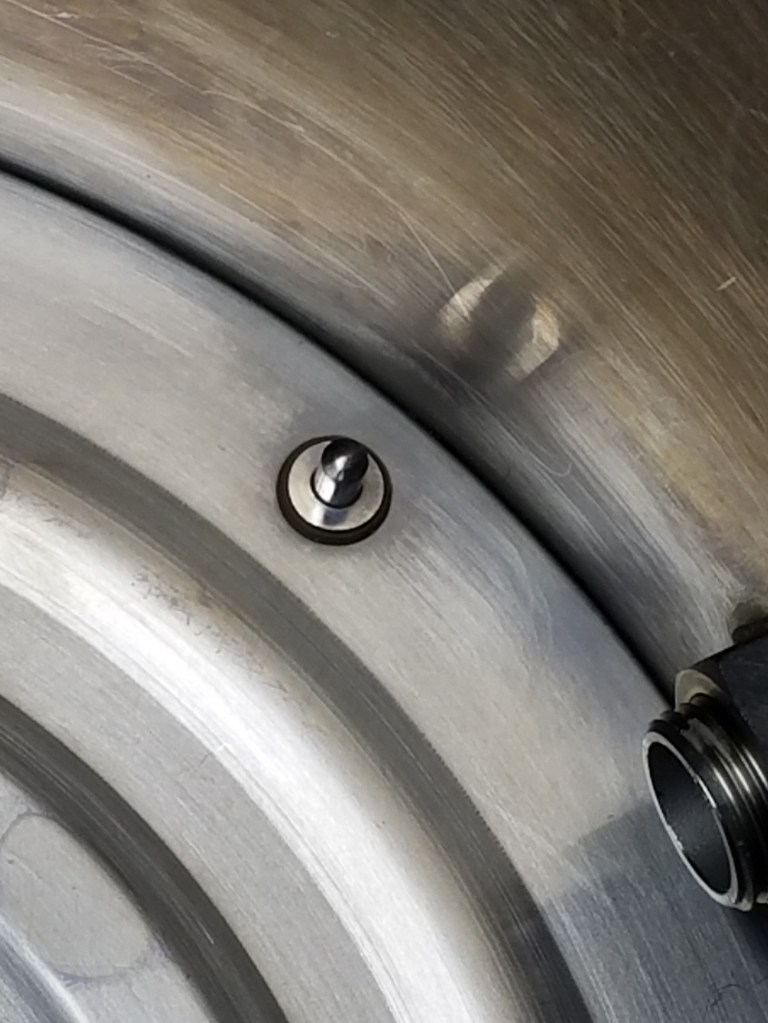
The temp probe, which is directly on the bottom on kettle, gets covered in grain dust/sludge that settles to the bottom. This sludge insulates and separates the probe from the true temp of the mash. This is easy enough to see when you give the mash a stir and the onboard temp display shoots up even though the heat is not even on.
Then the other thing happens. The element kicks on to heat because the covered up probe thinks the mash temp is low! There is no circulation, so now the mash heats unevenly and quickly ramps up and over the target temp before the probe can get an accurate reading!
Ok,, all that sounds bad and probably a lot to fix, but…
Remember our first priority up there in the beginning? Insulation!
When you have the kettle insulated properly, the temps DON’T really drop, But the dang sludge covered probe thinks it did.
So once my mash temp where I want it and stable,, I turn the control panel off so it wont kick the element on, because the now insulated kettle holds the temp just fine.
Another thing I have started to do now to help stabilize the temp, is to do almost full volume mashes. The more water mass you have the less your temps will drop.
I say “almost” full volume because I hold back a gallon or so because I wanna do a small sparge. I know some people scoff at the big +1.85ish:1 mash ratios, but BIABers (that’s what this system actually is) and myself have found this to be just fine.
So to recap the False Reading points:
- Particles from the mash have settled to the bottom, covering the temp probe. This causes the probe to cool faster than the rest of the mash and mistakenly turn on the heat element.
- Once mash temp has settled, shut off the controller and use only hand held thermometers.
- Your insulation and max volume mashes will keep temps steadier temps, and not usually need extra heat applied.
- As with any form of brewing, anytime you are checking temps and/or applying heat, stir and stir to get accurate reading.
So while the reports of temp control problems with the Mash and Boil are sorta valid, they are neither tragic, nor completely true.
After insulating and moving to the largest volume mashes, my temps only drop 1 degree at 30 min when I normally open it up to stir. I’m not really sure that it would drop any further than that over 60 min. But I never let it go that far without the midway stir.
Lack of pump
Wouldn’t just adding a recirculating mash pump keep temps under control?
I am not certain that it would. It certainly would keep temps even throughout the system, and stop the false readings and accidental ramping, But..
Pumps lose quit a bit of heat. And normally that would not be a problem on a auto-temp controlled system. But as of right now, on this system there is no way to adjust the 6 degree variance that the controller is set to.
For us old schoolers, watching a pump constantly cycle our wort up and down 6 degrees just isn’t gonna cut it.
Leaving it wrapped up without no pump and a steady temp just feels better to me. (I do have a pump though just in case my feeling changes)
I hope helps those thinking about picking up the Mash And Boil but have concerns.
:next time: Stuck Mash!
 9stripe Brewing
Thank you for following my blog!
LikeLike