It just was St Patrick’s Day! Here is my very condensed history of the Irish Stout.
St Patricks day is one of the best “beer” holidays there is. What beer do we all think of as the St Pats staple? Guinness.

Guinness is one of the standard examples of Irish Stout, or Dry Stout as they used to be classified.
With all the different stouts out there, how did this particular style become attached to Ireland?
Well that’s a pretty complicated, but interesting tale of locations, inventions, and tax evasion. I’m gonna snip it down to the basics.
To set up and shorten the first stop in the history of Irish stout, I will narrow things down to two major locations. London and Dublin. Other places were involved, but these two places were really the key to it all.
London and Dublin were THE largest producers of Porter from as far back as the 1600’s.
Yes Porter. Back then the styles of this UK region were mostly Pale ales and Porters.

Side note 1: In this time period there was mainly 3 type of malt in use. Pale, Amber, and Brown
-Pale ales using mostly the pale malt of course, and using lesser amounts of the ambers and brown malts
-Porters usually used only the Amber and Browns)
Side Note 2: (At this point in our timeline, the beers themselves were not getting taxed, it was the individual ingredients that made the beer that got taxed. Malt, and Hops.
Notice I didn’t say barley. Malted barley going into a beer was taxed, but Unmalted barley was not taxed,, and for that reason, it was illegal to be used in beer.)
The term “Stout” didn’t quite mean Stout as we know it just yet. At first it was merely a UK term used to describe the various strengths of beers for shipping. Pale ales and Porters were generally described as..
Common, Best, Stout, Extra, and Imperial. Kinda like the British pale ales still are today. But is was not really enforcement on how they were classified as such,,,, yet.
Beers continue to brewed, drank, classified and shipped.
Eventually descriptions changed and “Stout” became to be used as a description for Strong Porters only. The beer was mostly the same, just the name changed
As we now jump to the 17 and 1800’s, quite a few important beer related things started happening.
Mostly notably – Guinness famously leasing it property in Dublin for 9000 years, hydrometers and Thermometers were invented, storage facilities were evolving and tax laws changed. (Maybe I’ll do something on those one day!)
Thats all interesting and all, but lets skip ahead to the early 1800’s. To where Stouts start to separate themselves from the Porters.
To be accurate, this is where the Dublin Porters start separating from the London Porters.
To be even MORE accurate, this is where Guinness started to separate itself from the other Porters.
At this point, the London Porters were absolutely dominating the market. So Guinness, over in Ireland, in an attempt to keep its money rolling in, turned to one of the newest inventions of the very early 1800,s..
Black Malt (black patent)
A brand new style of roasted malt
Virtually 100% of the reason that Porters took the train to Stoutsville.

London Porters were too popular to change, so they continued to keep using the Amber malts and Brown Malts.
But Dublin,, well Guinness really, went out on a limb and started making Porters with only Pale and the new Black Malt. Mostly to save money.
How is this about Money?
Remember, at this point, the taxes were still on the ingredients that make beer, not the beer it’s self.
The Amber and Brown malts used in those London Porters were not as fermentable as the Pale Malt.
Guinness figured they could use less Pale malt to get the same gravities that the Ambers and Browns would give.
Plus the Black Malts were far more potent in tastes and color, so again, needed less. Thus making the over all beer cheaper. Plus the beer was good too.
(Note: While a Black Roasty beer using only Black patent and Pale might not sound all that world changing today, keep in mind that most beers back then because of the process (not nessearily choice), also mingled in flavors like smoke and sour to round things out)
In order to distinguish this “new beer” from its London counterpart, Guinness began marketing this new version of Porter, as “Extra Stout”
It did in fact become extremely popular. And soon, because of that popularity, “Stout” claimed its own style.
You would think that once you are popular enough to claim your own style and market presence, and have steady money pouring in hand over fist,, you dont change it right?
Wrong.
We still have a few chapters left before we get to the modern Irish Stout
Those listening close may have noticed that the invention was Black Patent Malt. Which is NOT what Guinness uses today.
Remember back there when I mentioned that it was the malt and hops were taxed? Not the beer? I also mentioned that things like unmalted barley were illegal to use in beer because they were not taxed.
Well, The Free Mash Tun Act of 1880 changed all that. Now brewers were open to use whatever they wanted in beer, and the beer itself was now taxed according to gravity.
So, Guinness once again changes its formula not because it made the beer better,, but because it was cheaper.
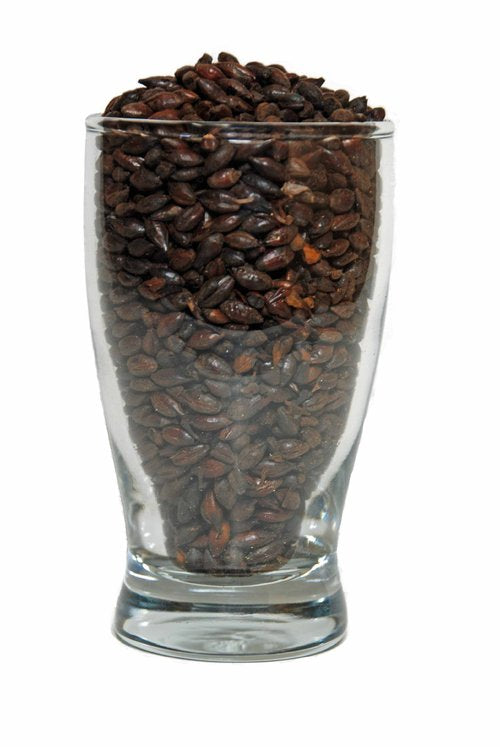
Black Patent Malt is a malted barley. Roast Barley however is NOT malted. Therefore far cheaper,, but previously illegal for brewing.
Guinness jumped on this, and even though their beer was extremely popular, they changed to the much different flavor of Roast Barley, purely in favor of cost saving.
To recap what the Free Mash Tun Act did, (but probably unintentionally) to the Stout world and UK beers in general…
By taxing according to the gravity a beer has (how strong it is), beers slowly began to lower in alcohol to lessen the tax burden. Sometimes a lot lower. For example Guinness now is one of the lowest alcohol beers you can find, when at one point it was on the stronger end.
This change eventually led to Stout no longer meaning “Strong Beer” but rather meaning just black beer being brewed in the UK.
Seemed like I focused on Guinness,, but I really almost had to when talking “original” Irish Stout.
But for sure there are plenty of other Irish brewed Stouts like Beamish and Murphy’s that have been around almost as long as Guinness, and for the most part, changed far less!
Most still feature grains like the Black Patents or Coffee/chocolate malts instead of the Roast Barley that Guinness is famous for.
As usual, it mostly came down to who had better marketing skills to become the “essential” Irish Stout.
So there is my short and highly edited version of Irish Stout history!
But what exactly is an Irish Stout today?
Today the Term “Irish Stout” does not necessarily mean a stout brewed in Ireland, rather it means a beer that fits into a preset style category created for beer judging and just general classification. (So consumers have somewhat of an idea of what they are ordering or drinking)
http://www.bjcp.org/style/2015/15/15B/irish-stout/ for the specific of today’s Irish Stout
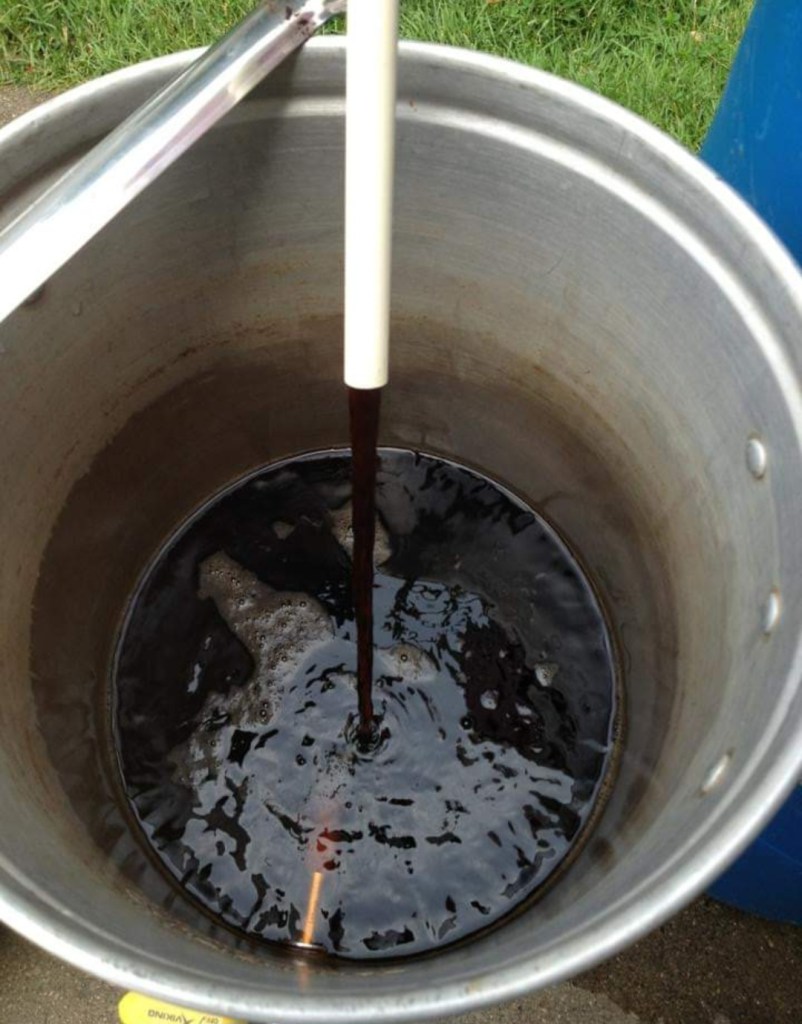
But to sum it up, MY description of an irish stout is..
A lower gravity black colored beer, roasty like coffee or roasty like burnt-ish grainy taste and aroma.
Firm to high bitterness with some, to no hop taste
Creamy texture is optional, but needs a dry like finish. Should not be sweet.
A British yeast character is preferred. But not a deal breaker if not there.
Now to the fun part. Lets Make an Irish Stout!
Brew an irish Stout
A generic everyday Irish Stout is pretty straightforward as they really should be a non complicated grain bill.
A modern Guinness “clone” is a whole other adventure into Cold steeping and psuedo-souring. Something I won’t be going into. Well, not today anyway.
I will start out with the beer that I’m brewing today, and the homebrewed example you are drinking right now. This version goes down the Roast barley path.
A simple recipe like:
-5lbs pale malt (usually british but can use anything)
-2 lbs flaked barley
-1 lb Roast barley
Enough bittering hop to hit 30ish IBU
A medium temp mash and your choice of British/Irish yeast.
Boom! That will get you a fabulous almost bulletproof Irish Stout
Of course most brewers will tweek it to their preferences as I have done here.
My recipe for what I’m brewing today is:
5.5 lbs Maris Otter
2 lbs flaked barley
1 lb Roast barley
4oz Black Patent
2oz Fuggles hops @ 60 min
1 pkt Nottingham yeast
Mash at 152
Ferment at less than 65
I chose to boost the gravity a bit more, because I also chose to boost the bitterness a touch. Plus I wanted to get a bit more of the sharper burnt roast, so I included the Black Patent.
A quick note: As you can see this is a fairly small beer, clocking in at a mere 4% or less. At this small of beer, small changes make a difference. Do your adding and subtracting of ingredients in small increments.
You do want a somewhat lower mash temp. I know Stouts mean thick beer to alot of people, but not so much in the Irish variety. With 2 lbs of flaked barley in there, there no issue with enough body.
While there is only a 60 minute bittering charge, the hop choice is somewhat important. Because contrary to popular belief you can taste the hops after a 60 min boil, especially if there is no other hop to cover it up.
You can go with a high Alpha hop like Magnum or Chinook to get 30ish IBU and use like ½ ounce. This will drastically cut down on any hop taste by having physically less hop material in your beer to lend their taste
I prefer some residual hop taste, so now go with 2 ounces of the Fuggles because there is so much actual hop material, that some taste carries over.
Yeast choice really is a matter of preference. I personally have used Coopers, Muntons, Nottingham, Windsor, 04, 05, Edinburg, London Ale, Irish Ale in this exact recipe and Its just fine. I do normally use Nottingham or Windsor though.
Do consider though that with these British yeasts, you can manipulate their taste quite easily with ferment temp. On the lower end, high 50’s-low 60’s gets you more pear-like. The closer you get to high 60’s the more appleish.
There you go! My favorite Irish Stout to make.
 9stripe Brewing