Coming up on the next brew. The British Strong ale.
When this category first hit the books for the 2015 styles, I was anxious to brew one. But with no examples to be found, I had to go by the written description only. Which is a fairly non specific scribbling.
https://guidelines.beerstyles.co/2015-17a-british-strong-ale/
Mmmkay. So, as long as its strong enough, and is “British”-y enough we are good. I have taken all of this to mean something that’s in between a bunch of other beers. Something stronger than a brown ale, well hopped, but not as hoppy as an IPA, and not as strong as a barleywine.
Along the lines of an ESB, but with much darker flavors, (slight roasts, raisin, figs…) But fresh.
So like an Old ale, that’s not aged. The name is Strong Ale, but by todays standards it more a medium ale. 6-8% with mid range bitterness 30-60.
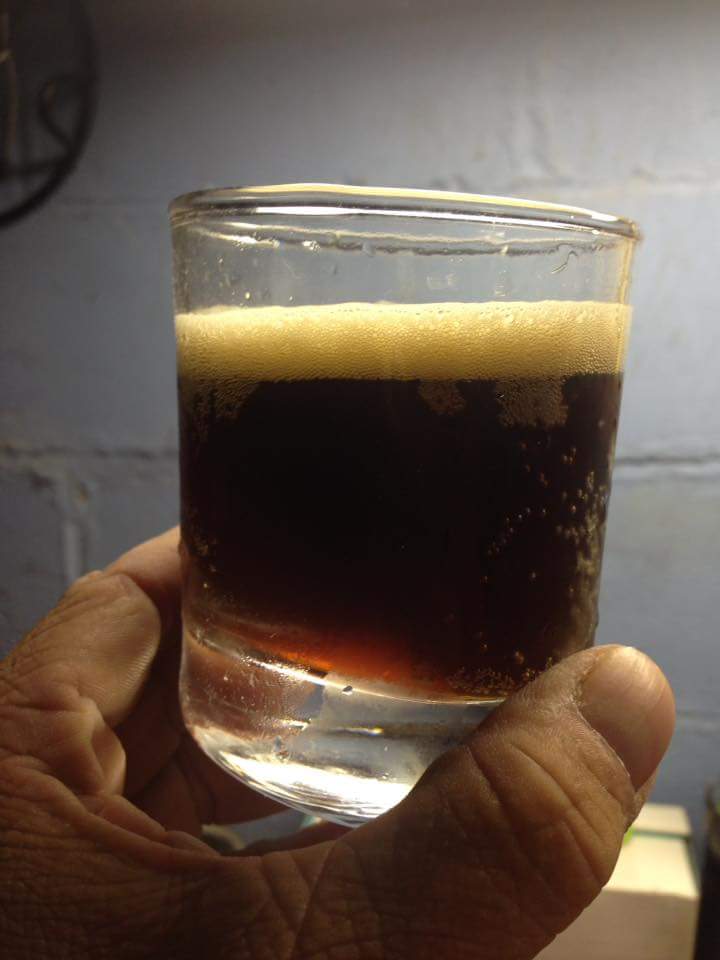
My first attempt at this beer last year gave me some insight on how some of those flavors work earlier on in the life of a beer. Because normally when I have brewed “old ales” I plan for the long haul.Over hopping and over dark graining a brown ale, because I know by the time the aged qualities start to happen, the hops and some of the malt flavors will have started to fall out.
But keep in mind that unlike an old ale, this is supposed to be drank sooner than later, we needed to subdue some of that. Crystal 80 instead of 120, Lower srm chocolate malts instead of black malt for restrained roasty. Less late hops over all, and moving them twards the flavor zone rather than flameouts. And moving the mash temp down a few degrees as these will be consumed before the body starts to go.
And the biggest improvement is going to be using a British yeast. I used a clean yeast the first time around. But that was mostly on purpose. As I wanted to be able to see which way I needed to adjust the malts, as I was surely expecting for such a little amount of the 80L to have such an effect. But surprisingly I was happy with the result across the board. So I am going to keep things the same except a bit higher mash temp and good old Windsor yeast.
Akatosh- British Strong Ale 17A 6.5% – 55 IBU
- 10lbs Maris Otter
- 12oz 80L
- 1lb aromatic
- 1oz chocolate malt (350L)
- 1oz galena 60
- 2oz east Kent goldings 10
- Windsor yeast
- 156 mash temp
 9stripe Brewing