Its getting to be that time..

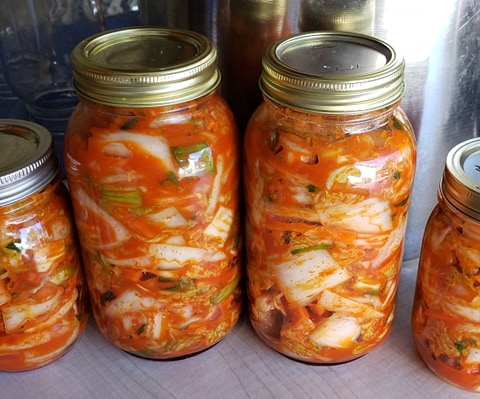
Time to get the “other” fermenters going. So will do a batch of Kimchi,, just to brush up on things.

You dont really need much for kimchi. A sharp knife, a few big bowls and some jars. Dont really need a fermenter for this.

For ingredients I use:

Nappa cabbage
Nappa Cabbage
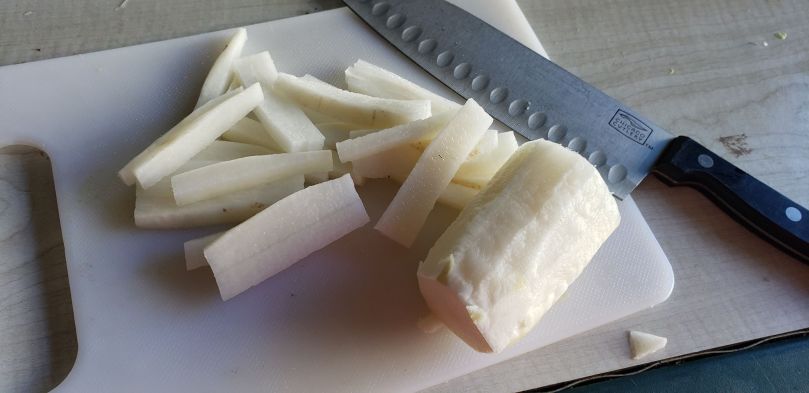
Diakon Radish

Green onions

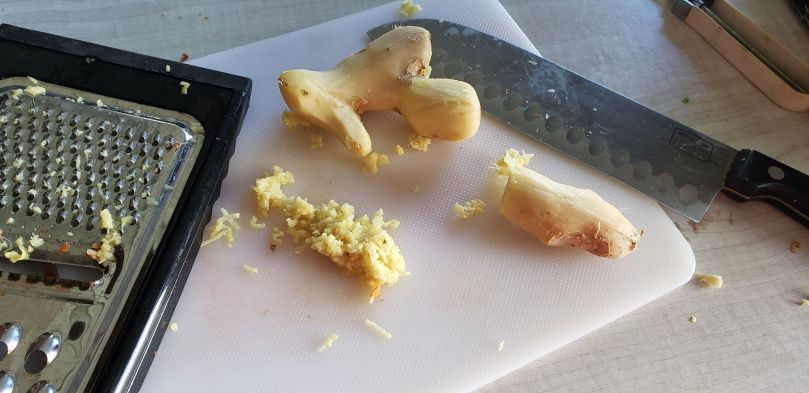
ginger
ginger
canning salt
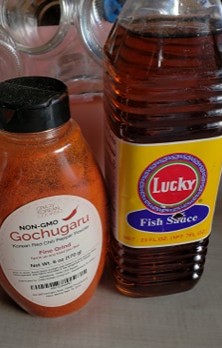
gochugaru pepper and fish sauce
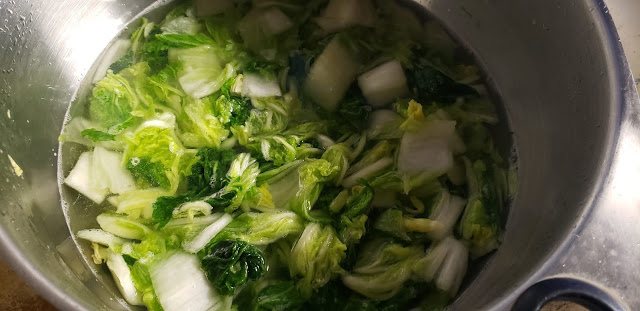
cut up the cabbage in big hunks,, inch size maybe.. throw some salt on it.. like lots,, 1/4 to 1/2 cup. Mix it up, scrunch it up with your hands and just let it sit and wilt or drain for an hour. (dont worry about all the salt,, you’ll see why later… so use alot) it will start pulling juice out of the cabbage.
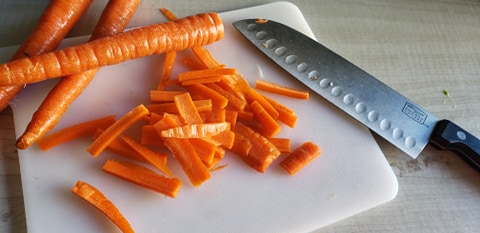
cut up the carrorts, diakon onions or what ever else you throw in, into matchsticks or how ever you want,, just make them small
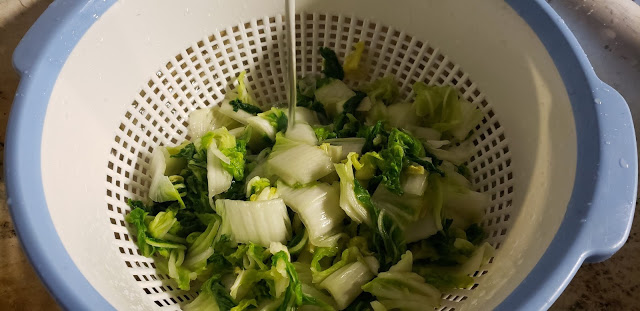
After an hour drain and rinse the cabbage. There will still be enough salt to do its job
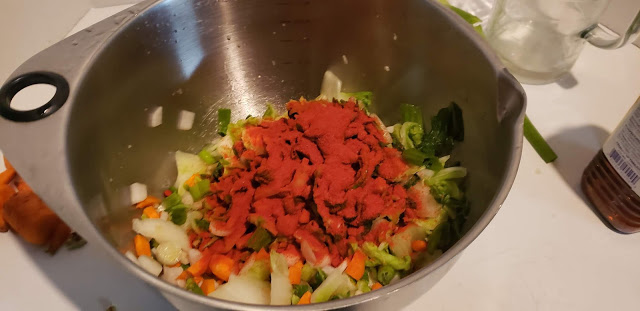
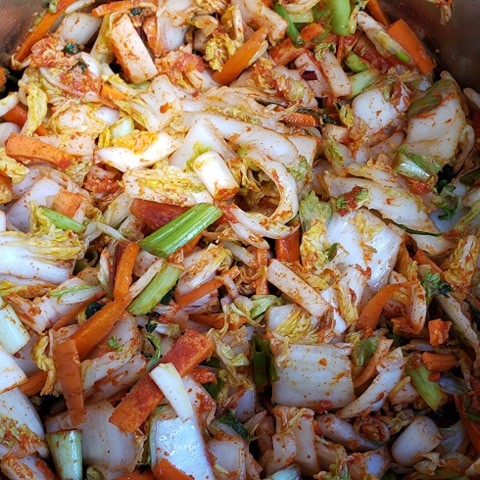
I use 2-3 TBS fish oil and 1/8 cup of the pepper per head of cabbage but up to you. Mix all up good!

Pack into jars with a bit of head space.

Important!! if you use jars like this instead of a fermenter.. leave the lids loose so it can gas off. and maybe keep on a plate or bucket. When it starts fermenting it may bubble out the top if you didnt leave enough space..

But,, after 4 days its ready! A week is better, 2 better yet! You might see bubbling up the sides or even taste fizzy… its supposed to be like that,, well good stuff is any way.

Put them in the fridge to slow down the fermenting. Yea,, just slow down,, it will keep going and getting better.

Oh this batch used 2 cabbages, 1 large diakon 5 carrots about 3 inches ginger 2 pack green onions, 1/2 cup of the Korean Chile powder and about 10 shakes of fish sauce.. and takes about an hour, waay less if you pre cut the carrots and radishes.

Stay tuned.

Big Brew Lager

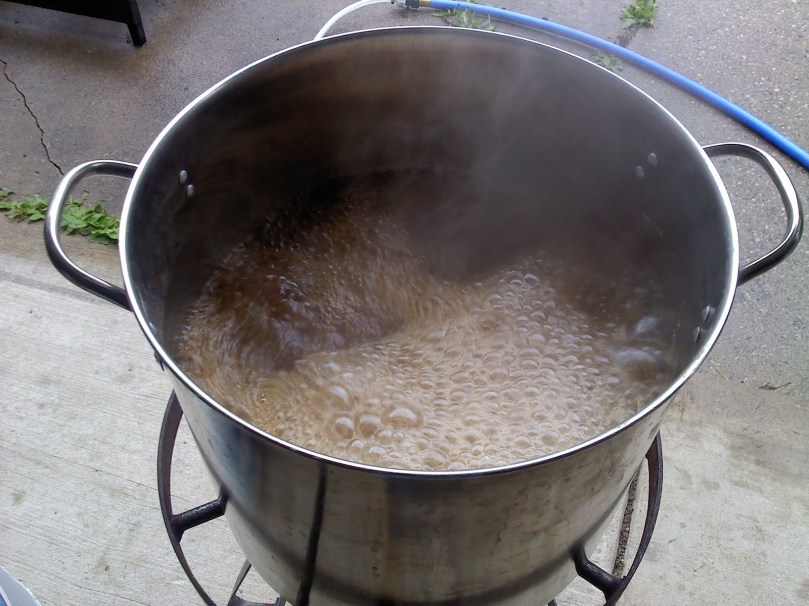
This weekend the club brewed for Big Brew Day as usual,, except it wasn’t usual. Since everyone is still on lock down, we all brewed on camera. And it worked pretty good for us.

20200501_132542.jpg

Most people are getting used to doing things virtually, so it was pretty smooth.

I decided that since it would be my first brew outside this year,, why not dig out the old original system.

Going back from the Mash and Boil was pretty jarring. Not that its any more difficult or anything, but the amount of things that need attention. I see I’m pretty spoiled now with things like the timer and temp control. There was no setting up early and having strike water ready.

But I really felt more in control of a brew than a normal M/B brew for some reason. And definitely have a clearer wort due to a better vorlaff.

As far as the brew goes, it was a run of the mill Mexilager Corona, or adjunct lager

Mexilager
6lbs 2row
2lbs flaked corn
1lb flaked rice
1/2oz galena @60
1/2oz galena @15
34/70 yeast
Mashed at 152
And after not using that old system in about 3 years,, I was still able to hit all my numbers, and much more fun I think. Maybe I’ll leave the Mash and Boil downstairs for the summer.

Stretching ingredients

Even in the current crisis, us brewers are gonna brew. Or at least want to brew. Brew shops are busy, (if they are open) but I have just seen notifications from some manufacturers saying they will be shutting down for a while.

I don’t think it’s gonna be complete mayhem to the hobby, but a bit of long-range planning might be a good idea.

7ee2e-0925111013

There was a bit of talk about a hop “shortage” last year because of droughts, floods and fires. But those predicted shortages were mostly for specific varieties. So substituting might be in our future. Remember about 15 years ago during the last major hop shortage? Brewing didn’t stop. It just changed a little. So, yea, I’ll probably go back to brewing the Irish and other low hopped beers. Stretch out my supply a little.

But if there is a “good thing” this time around, it’s the fact that there are many times more varieties of high alpha hops around compared to the last time hops went scarce. Less overall volumes of hops needed to get IBUs up when you need a fix. Plus is far easier and cheaper now to find those pound bags.

Grain is easy to store, (pretty much what grain is meant to do… sit there and wait) a 50lb bag easily makes 8-9 batches of mid strength 4-5% beers. A few more if you throw some adjuncts in. Buying grain in bulk has always been the best way to go to save money. A clean cooler or a couple of buckets with lids is all you really need to store grain.

Yeast seems to be the one that is the most time sensitive… But it doesn’t have to be. Re-pitching is an option. Get your next batch ready to go the same day as you bottle or keg. After racking the first beer off the cake, use a scoop or two of it in the next batch or batches.

20180513_123605.jpg

A longer-term yeast option is “washing” it. (click here for a better look at it) After you rack the beer off the cake, you then take that yeast cake and separate the live yeast from the other gunk. That separated yeast can then be stored in the fridge for months. Several batches of yeast can be made from one cake. Just starter them up and pitch as normal.

Just a couple of ways to stretch your ingredients out a bit if things get a bit limited.

I’ll be posting some of my ingredient stretching brews soon.


Stay tuned.