Alt

A couple of us are planning on entering the Germanfest Stein Challenge. A beer contest for only German style beers.

I chose to brew an Alt Bier. I have brewed Alts a couple of times and they have been good beers,, not sure how they would score against the guidelines,, but we will see I guess.

I also used this beer to start messing with water. We do have decent water here, but a few things can be done. I didn’t go all out on the water,, so I went with just a 1/4 tsp Gypsum, and a 1/4 tsp calcium chloride.. oh and 2oz of acid malt.

The rest was just an old Alt recipe that I’ve made before except I used Maris Otter instead of the Pilsner malt. just because I wanted the malt to stand out a bit more than usual since its going to a contest.

  • 4.5 lb Munich malt
  • 4 lb Maris Otter
  • 2oz black pat
  • 4oz crystal 40
  • 2oz Acid malt
  • 1oz Perle @60
  • 1oz Spalter @15

Went with a Medium body mash of 154, And used Munich dry yeast. Munich Dry yeast?… aint that a wheat yeast? Yep. But it gives that certain “Germanish” aroma and flavor profile.

Skipping ahead to today,, I just kegged this beer and it is what i was looking for in the malt, hop and yeast profile,, but I do have to say that it does seem a bit,, mineraly or something in the feel of it. I am assuming from the water additions.

I’m not yet saying that its a bad thing,, just that I did notice it right away. And since I have been brewing with this same water for 25 or so years,, pretty sure I would notice something different. I will how ever, be keeping track of this one a bit closer and see how those additions affect the final beer.

Red, ESB, and Wheat

Doing a quick catch up here on things while we are “emptying” a few kegs for summer use.

Proud to say that the Beet Saison did in fact win the Copper State Wort Challenge. Besides being a damn good Saison, it looks great and is very easy to make.. and that’s what probably was the deciding factor.

Next up.. a few brew days. Had a dual Mash and Boil brew with Maxwell back in March. We did some Irish Reds.

I actually was not very impressed with mine. I left it to ferment down at the store. It was on the floor against the outside wall. So it was probably fluctuating between high to low 50s. Not so detrimental, but will most likely take a bit extra for it to come around as they say. Its now awaiting it place in the fridge rotation.

20190407_124241.jpg

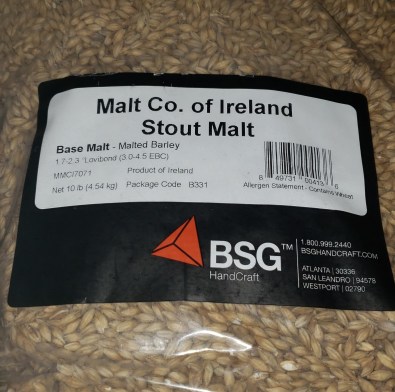
A few weeks ago I won a bunch of grains from the Bull Falls Golden Growler contest. Some Golden Promise and something called Stout Malt. Presumably a Maris Otter-like malt?

Used the Golden Promise and brewed up the Hobgoblin clone that I brewed back 2012. That beer was beyond fantastic. Still in primary, but hoping to get it kegged up within the next week. (Soon as I can finish off a keg)

And this past Saturday I did a quick and usually easy American Wheat with Amarillo hops. I say usually because I decided to use Beersmith instead of my own calculations and ended up with some wonky water volumes. Some of it my fault, some of it not. But nothing too detrimental. Should be a good beer that’s still fermenting well right now.

And the rest of my week will be getting the TTO beers labled and ready for drop off. I don’t have as many entries as usual, but the ones I do have are pretty good.

Next up, I will be doing something with that stout malt.

Fixing the stuck sparge. (Mash and Boil)

Waaay last year, I mentioned that one of the upcoming articles would be the stuck sparge issue on the Brewers Edge Mash and Boil. Here it is finally!

If you are a new Mash and Boil owner, go back and check out my previous post on fixing some of the units slight issues.

Even now after a few years of being in circulation,, one of the biggest complaints about the Mash and Boil (M&B) is the slow or quite often the stuck sparge. The M&B mash tube (or basket) is designed with drainage holes only at the very bottom. This poses a major problem for the suggested method of lift and drain.
Everything gets slammed to the bottom during the lift and plugs mesh bottom, then no drain.

When this happens you normally see your drainage is quite slow. And then grow even slower as the finer particles start settling out, and eventually onto a full on stuck sparge with no draining at all.

When this happens you need to get in and stir it up to open the drain holes,, while letting more and more of the fine grain thru into the wort.. this is almost always not what you want.

I see a lot of people mentioning that this is a grain crush problem. This is the same grain crush that I have used forever in my mash tun. Well.. several mash tuns. There is no reason or no way I’m going to make a less efficient crush just for this simple problem.

There are basically three things you can do to minimize the stuck or slow sparge.
(I say three, but two are the most viable, and one being the easiest)

-The first thing I did when this happened during my first couple runs was to simply leave the basket in place and drain off the wort thru the valve into another kettle, remove the basket after it was drained and poured the wort back into the unit for boil.
I do not recommend this method, however it does work well as the bottom grate does not seem to plug as easily when it is drained off like this.
-Second, and much better method. Rice hulls. Always a good idea to throw in a few handfuls of the hulls for mashes that are prone to sticking.
This certainly helps here for sure. But,, its mostly helping the wort drain thru the grain bed. The holes in the basket are still prone to plugging before the grain bed get a chance to set up and start filtering. So I started using the third method.

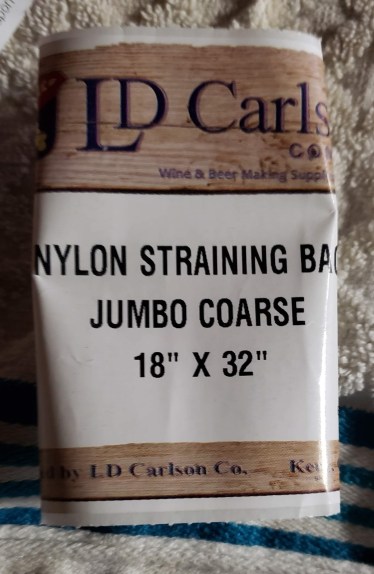
The third method and the one that I found to be the best,, is to use a mash bag INSIDE the mash basket.

This keeps the nice barrier between the grain and those holes at the bottom and let’s the grain bed drain from the sides as well.
Even a 70% oat flake beer with no rice hulls drains as fast as an empty basket would.
And because it’s inside the tube, the elements won’t scorch or burn it.
The basket handle comes right off so you can pull or dump the bag out with no snagging. Then the bag is washed and dried out till next brew. I’ve got a few years with the same bag.
20190304_180546.jpg

Using the bag allows for a better/faster way to do a vourlaaf for greatly reduced grain powder gunk in the boil and ultimately, into the fermenter.
And pump users get an extra comfort in knowing that they are less likely to stick during recirc so nothing burns up.

This $5.00 bag saves a lot of grief, give it a shot and be amazed.