Rebrew Series #1- Scottish 60 part 1

(Whoops. Didn’t hit publish. This should have went out last Friday… Oh well) 

The first blog posted rebrew that I am going to tackle in this series will be the Scottish 60. Or Laceration as I called them, (as you may or may not find out later).

It was one of those beers that I brewed without ever having a real commercial version of.
I brewed this beer,, or something like it as an extract kit a few times back in the 90’s, not sure of the brand really, but the version in the original post is all grain.

Not exactly sure when this brew actually happened though. The dates on these older posts are sometimes the right dates and and sometimes they are reposts of my original blog that is no longer around. But I would guess by the things I’m mentioning, it may be around 2000ish

Anyhow,, Its a Scottish 60 Shilling by the BJCP of that time,, today I guess it would be classified as a Scottish Light? And again, at this point in time, I don’t believe I have had any commercial versions of this style. Because back in those 90’s and 2000’s craft beer was pretty bleak around here, and I didn’t know any other homebrewers at all yet. So I just picked up extract kits, and thats what I expected it to taste like I guess.
So those kits musta been good enough that I wanted to brew a 10 gallon all grain batch.

Here is the Recipe as I brewed it back then:
10 gallons Laceration
12 lbs Maris Otter
.6 lbs roast barley
1.5oz East Kent @ 60
Windsor and Coopers yeast (was split batch)
Mash 152

What I remember thinking here was that I needed to get some caramel or maybe burnt sugar flavor in. So I took a bit of the first wort and boiled it down to syrup while the rest of the wort came up to boil.
Sounded like a decent plan, But not historically accurate.. I know this was a spur of the moment thing. But do not remember if I figured water amounts first or just went and did it.

I guess what I’m doing here is trying to get a beer that tasted like the first ones that I brewed, plus apply things that I know now to use more standard procedures for repeatability.
So, true Scottish lights/60’s don’t caramelize for flavor, its the grain bill. I think I should try to get some Crystal malts in there to get the authentic look, feel and taste.

The beer in the original post was also a yeast experiment. Split it into two 5 gallon ferments. One with Windsor yeast and one with the old stand at the time.. Cooper yeast.
It looks like I preferred the Coopers over the Windsor, more because of cleaner taste and body maybe. Windsor is pretty bad on settling out.

I want some of those brit style esters, but also something that will attenuate down and flocculate out a bit more. I have an idea here, but will save that for brewday.

Ok I think we have a plan for this rebrew of the Scottish 60. No big changes,, so we should be pretty close to that beer back then.

I’m gonna go run some numbers and get set up for this weekend brew. Then talk about any changes and the brew in part 2. Then review in part 3.

Rebrewing old recipes

I’ve had this blog now for over a decade now. Brewed and posted a lot of beers. But sadly in the few times that I have moved servers and locations, I’ve lost some of the first few years.

Since I’ve been brewing much much longer than when internet was easily accessed, I have some notes scribbled here and there in notebooks as well.

I think I’ll start doing some rebrews of my old beers. I’ll throw in one of those old old recipes now and then, but they are almost all the same stout over and over.

I didn’t really start branching out into different brews until around the 2000’s and that’s where a lot of my notes started going going on to floppies. I seen no reason to keep 5.25 disks.. so they got chucked.

The earliest posts I have that survived are from 2010 so there is more than enough brews to choose from.

So to start out with, I’ll give the Laceration a go. It’s a Scottish 60 that I brewed first back in the extract days and moved it up to all grain… Plus I believe this was my first 10 gallon batch. And did a split ferment with 2 different yeasts.

I’ll get it re written for a 5 gallon batch this weekend and will do a brew day report. I did a lot of spur of the moment things so an accurate rebrews may not be so easy. But check out the original post to see what I mean.

Stay Tuned

Yeast problem

This past Saturday I stirred up a cider. Just the normal store bought juice that I use all the time, and a bit of the raspberry wine base. Pretty standard stuff.

Usually I use Nottingham yeast for my ciders. Finishes a bit sweeter and has the apple-ish esters that go great in a cider. But this time I used new yeast.

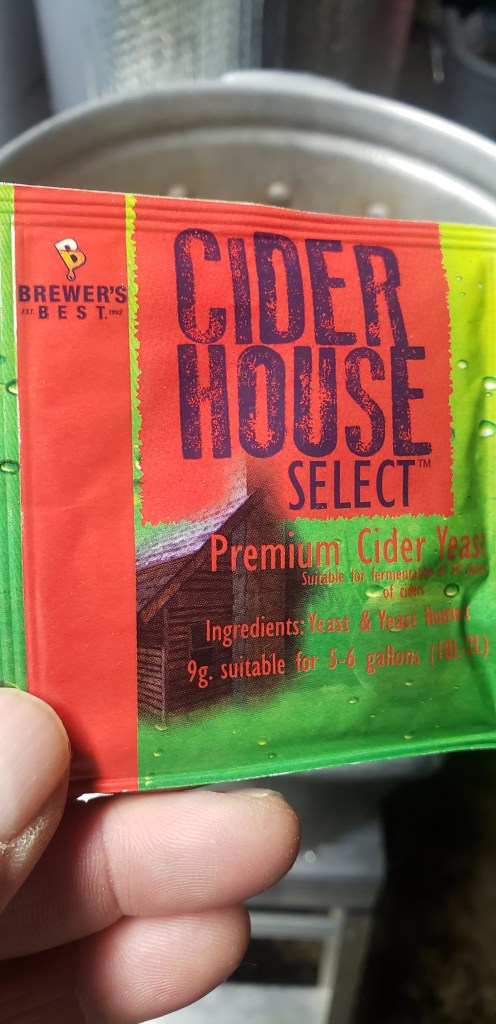
The Brewer’s Best Cider House Select. This is the yeast that comes with those fantastic cider kits. And while I couldn’t find much info on the yeast it’s self, I have had the ciders made with those kits many times and it was great.

There isn’t much to do in cider when starting with bottled juice, except to add some nutrient, stir and put in the 67F chamber.

I do a staggard nutrient, meaning add some at pitch, some on the third day with a good stir to release some Co2. This helps the yeast out, and really keeps the fusels down.

Day 2. No signs of life from this yeast. If this would have been my normal Notty yeast I would have been worried. But this stuff is new to me so maybe it’s a slow starter.

Day 3. Still nothing. Now I’m worried. But it’s also nutrient day, so I’ll be opening it up to see whats going on. Maybe my lid just wasn’t on right.

Nope. Nothing going on in there at all. Even stirring got no push of bubbles from Co2 escaping like it normally would if there was activity. Some yeasts are slow starters, but after 3 days…time to do something.

Well I gave it another dose, and threw in the Nottingham. Next day, blam! We got the normal Notty heavy action.

I don’t know what was up with that cider yeast. Dont know if it has a super lag. But 3 days is a looong time with nothing. But from the stir it didn’t look like anything bad took over. So we should be good.. I hope