Waaay last year, I mentioned that one of the upcoming articles would be the stuck sparge issue on the Brewers Edge Mash and Boil. Here it is finally!
If you are a new Mash and Boil owner, go back and check out my previous post on fixing some of the units slight issues.
Even now after a few years of being in circulation,, one of the biggest complaints about the Mash and Boil (M&B) is the slow or quite often the stuck sparge. The M&B mash tube (or basket) is designed with drainage holes only at the very bottom. This poses a major problem for the suggested method of lift and drain.
Everything gets slammed to the bottom during the lift and plugs mesh bottom, then no drain.
When this happens you normally see your drainage is quite slow. And then grow even slower as the finer particles start settling out, and eventually onto a full on stuck sparge with no draining at all.
When this happens you need to get in and stir it up to open the drain holes,, while letting more and more of the fine grain thru into the wort.. this is almost always not what you want.
I see a lot of people mentioning that this is a grain crush problem. This is the same grain crush that I have used forever in my mash tun. Well.. several mash tuns. There is no reason or no way I’m going to make a less efficient crush just for this simple problem.
There are basically three things you can do to minimize the stuck or slow sparge.
(I say three, but two are the most viable, and one being the easiest)
-The first thing I did when this happened during my first couple runs was to simply leave the basket in place and drain off the wort thru the valve into another kettle, remove the basket after it was drained and poured the wort back into the unit for boil.
I do not recommend this method, however it does work well as the bottom grate does not seem to plug as easily when it is drained off like this.
-Second, and much better method. Rice hulls. Always a good idea to throw in a few handfuls of the hulls for mashes that are prone to sticking.
This certainly helps here for sure. But,, its mostly helping the wort drain thru the grain bed. The holes in the basket are still prone to plugging before the grain bed get a chance to set up and start filtering. So I started using the third method.
The third method and the one that I found to be the best,, is to use a mash bag INSIDE the mash basket.

This keeps the nice barrier between the grain and those holes at the bottom and let’s the grain bed drain from the sides as well.
Even a 70% oat flake beer with no rice hulls drains as fast as an empty basket would.
And because it’s inside the tube, the elements won’t scorch or burn it.
The basket handle comes right off so you can pull or dump the bag out with no snagging. Then the bag is washed and dried out till next brew. I’ve got a few years with the same bag.
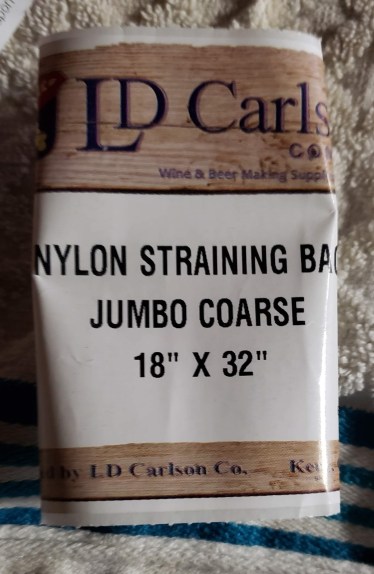
Using the bag allows for a better/faster way to do a vourlaaf for greatly reduced grain powder gunk in the boil and ultimately, into the fermenter.
And pump users get an extra comfort in knowing that they are less likely to stick during recirc so nothing burns up.
This $5.00 bag saves a lot of grief, give it a shot and be amazed.
 9stripe Brewing
[…] was a tough mash in the old Mash and Boil The mash pipe is quite small and narrow, so stirring this much grain was difficult. But managed to […]
LikeLike