Back in the first week of June we were getting set to have the first of the summer heat stretches. It was looking like 90s for a week. And that means that my garage would then be the perfect place to brew a Kveik yeast beer.
Last summer I did my first Kviek brew in the garage. and it turned out to be great! So I knew I had to make the most of this heat wave.
Thought that maybe a bit maltier beer may show off the Kviek a bit better, so we went with a Vienna Lager type recipe.
- 5lbs DArk munich
- 4 lbs 2row
- 1 oz saaz at 60
- 1/2 oz saas at 15
- 1/2 oz saaz at flame out.
- Voss Kviek — mashed the grains at 152
So the Kviek kveiked great. and as last time with it, there is about double the yeast sludge as regular yeasts. So I wanted to save some. And I remember reading some where that the old Norwegians would dry the yeast on wood planks to repitch later….
I didnt have any planks ready to go when I thought of this, so I went out and clipped off a cedar branch.
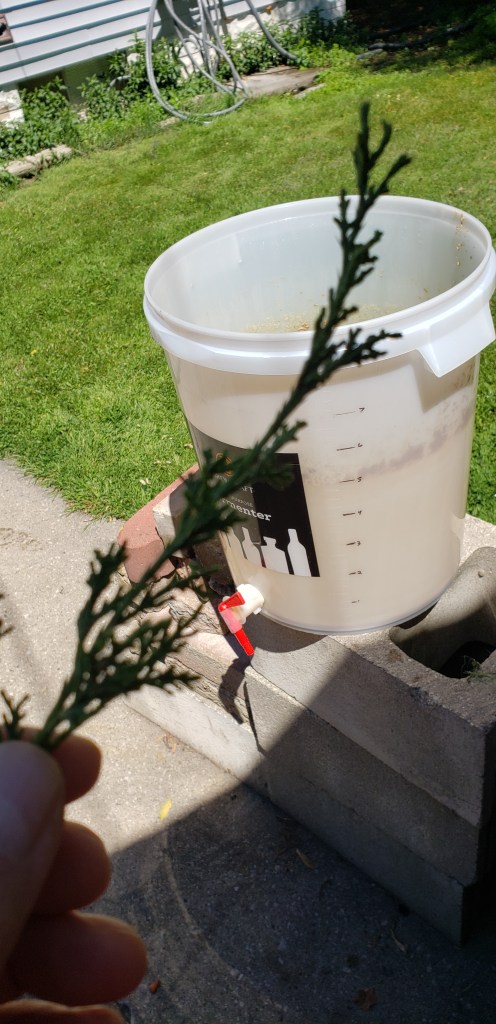
slopped it in the sludge


and let it dry in my hot garage.

For over a month of 100+ degrees of heat.

Then just dropped it into the next batch.
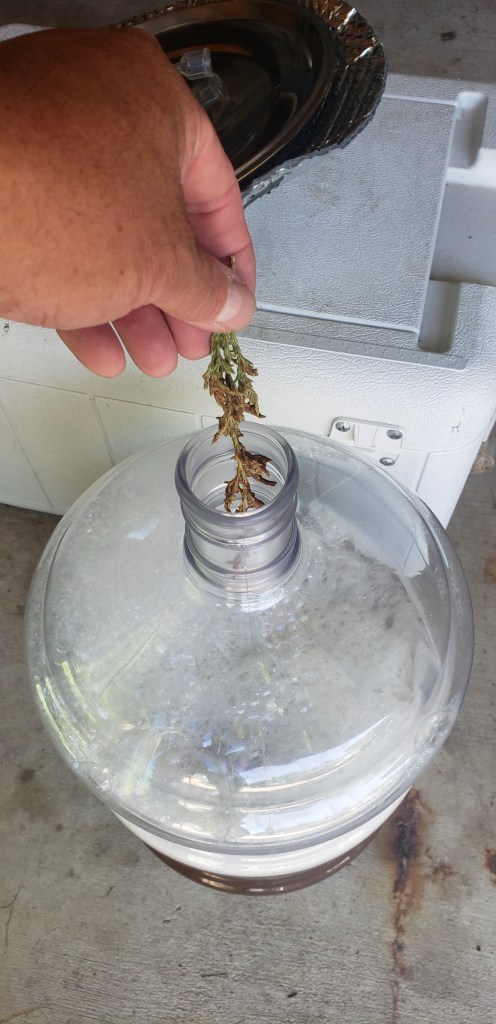

It did have a day lag, but there was activity around the branch. Kinda like an alka seltzer tab. I think it was the yeast rehydrating and starting to work, because less than 5 hours after I looked at it, it was in FULL ON ferment. at 90 degrees.
The original batch with a full pack of yeast took almost 4 days to complete, and a week to clear (as much as Kveik clears anyway). This batch with just that sticks worth was pitched, fermented full and cleared in only 3 days and we were kegged and drinking it in 7 days from pitch. But I guess this yeast does work better when under pitched.
After tasting it now for a few weeks, I really have to say that the second stick pitched beer is cleaner and less yeasty tasting.
Now since I have done this, I see there are all a bunch of articles on drying an freezing this yeast, so it was a good idea after all.
I think after now doing 3 batches with Kveik, that I am ready to start incorporating it into more of the summer beers. There are more strains coming out,, so will b trying those too,, as long as the garage stays hot.