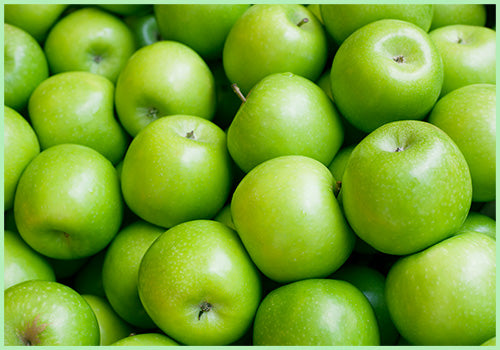
This week let’s look at one of those flaws that I posted about a few weeks ago. Acetaldehyde. That distinctive green apple flavor.
This is one of those flaws that is sometimes hard to tell if it’s really a flaw or not because it’s generally in all beers, wines and ciders at some point. It is a natural process of fermentation. But it when it gets raised to higher concentrations that it starts to be a problem.
As I already said, Acetaldehyde is usually detectable as a green apple flavor, but can also come off as cidery or even latex paint.
Why is it a flaw? To keep this family friendly lets say it like this… Acetaldehyde, in large amounts don’t usually do your body any good. Some of those hangovers you’ve had, might not have been really hangovers. It could have been your body reacting to too much Acetaldehyde.


What is Acetaldehyde and how does it get in your beer? Your yeast.
Every yeast creates Acetaldehyde and CO2 as it converts your sugar to alcohol. So it’s always in there. But after at the end of fermentation good healthy yeast will clean up and continue to turn (most of) the Acetaldehyde into alcohol and down to usually undetectable levels.
But it’s things like old yeast, or under pitching and especially not giving your yeast time to clean up after it’s self that you start to get or stay at higher levels. This is when you move into flaw territory.
You used to see the green apple quite often years and years ago. But soon as not using a secondary became the standard, getting acetaldehyde in those higher amounts was rare because the beer stayed on the yeast longer.
But today we are starting to see a new resurgence due to the modern brewers desire to rush thier beer to glass as fast as possible.

But to be fair,, low levels can be fine in certain styles of beer and wines. American Lagers and some Belgian ales allow for low amounts as some say it provides “crispness” but for the most part it is really not something you want.
So if you are tasting green apple in your beer, you probably should be looking at your yeast care. Give your beer a few more days on the yeast after fermentation is done, and maybe a diacetyl rest (that’s another topic) at a slightly warmer temp to let the yeast clean up that Acetaldehyde.
Acetaldehyde is a flaw yes… but a fairly easy one to diagnose and just as easily prevented.
Sources:
https://www.stonebrewing.com/blog
https://beerandbrewing.com/
https://www.asianbeernetwork.com/
https://www.oculyze.net/
 9stripe Brewing